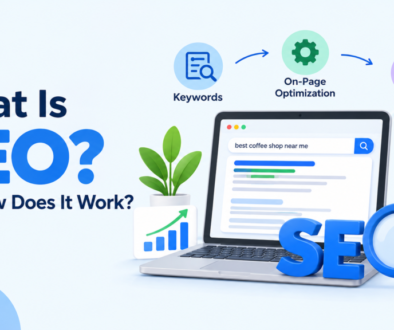
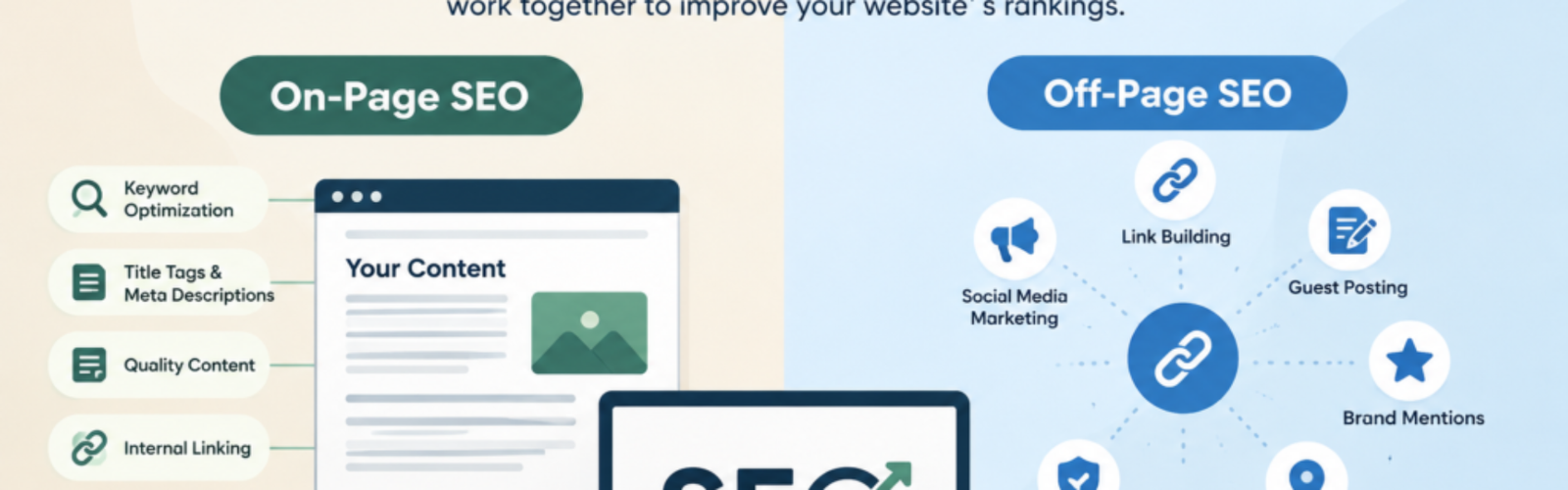
what is on page seo & what is off page seo
# On-Page SEO vs Off-Page SEO: What Is the Difference?
In the digital world, having a website is not enough to attract visitors. Your website needs to appear in search engine results when people search for products, services, or information. This is where Search Engine Optimization (SEO) becomes important. Understanding on-page and off-page SEO helps businesses improve their online visibility, attract organic traffic, and reach their target audience.
If you want to improve your website’s Google rankings, learning **what is on page seo** and **what is off page seo** is an important first step.
## What Is On-Page SEO?
**What is on page seo?** On-page SEO is the process of optimizing individual web pages to help search engines understand their content and provide a better experience for visitors. It involves improving elements that you can control directly on your website.
The main goal of on-page SEO is to make your content relevant, useful, easy to navigate, and accessible to search engines.
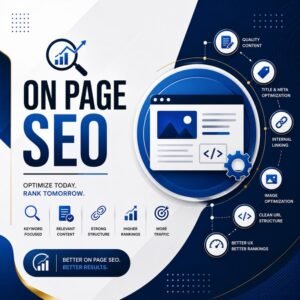
### Important On-Page SEO Techniques
**1. Keyword Optimization**
Keywords are the words and phrases people enter into search engines. Using relevant keywords naturally in your title, headings, introduction, and content helps search engines understand your page’s topic. Avoid keyword stuffing because it can harm the user experience.
**2. Title Tags and Meta Descriptions**
A title tag tells users and search engines what a webpage is about. A meta description provides a short summary that may encourage users to click on your result. Both should be relevant, clear, and engaging.
**3. High-Quality Content**
Creating original, helpful, and informative content is essential for SEO. Your content should answer users’ questions, solve their problems, and provide genuine value. Organize information using headings, paragraphs, lists, and relevant examples.
**4. Internal Linking**
Internal links connect one page of your website to another. They help visitors discover related information and allow search engines to find and understand your website’s pages more effectively.
**5. Image Optimization**
Use descriptive image file names and meaningful alt text. Compress images to reduce loading time and choose suitable image formats to improve website performance.
**6. Mobile-Friendliness and Page Speed**
Your website should work smoothly on mobile phones, tablets, and desktops. Fast-loading pages and a user-friendly design help visitors access information without unnecessary delays.
## What Is Off-Page SEO?
**What is off page seo?** Off-page SEO refers to activities performed outside your website to improve its reputation, authority, and visibility in search engine results. While on-page SEO focuses on your website’s content and structure, off-page SEO focuses on building trust and recognition across the internet.
Off-page SEO helps search engines understand how other websites and online communities perceive your content and brand.
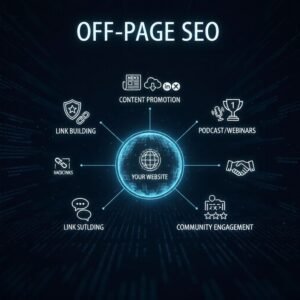
### Important Off-Page SEO Techniques
**1. Link Building**
Link building involves earning backlinks from other websites. When relevant, trustworthy websites link to your content, those links can help strengthen your website’s authority. Focus on earning quality backlinks instead of purchasing spammy links or using manipulative link-building tactics.
**2. Guest Posting**
Guest posting means publishing useful content on relevant websites within your industry. It can help you reach new audiences, establish expertise, and earn backlinks when the publisher naturally includes an appropriate link.
**3. Social Media Marketing**
Sharing your content on platforms such as Instagram, Facebook, and LinkedIn can increase brand awareness and bring more people to your website. Social shares are not generally a direct Google ranking factor, but the exposure may help your content reach people who choose to link to it.
**4. Brand Mentions**
When people discuss your business or brand online, they can help increase recognition and credibility. Positive brand mentions may introduce your business to potential customers, even when the mentions do not include a link.
**5. Local SEO and Business Listings**
For businesses serving a particular location, maintaining accurate business information across relevant directories and Google Business Profile can improve local visibility. Customer reviews and consistent contact details also help people evaluate your business.
**6. Digital PR**
Digital public relations involves earning coverage, references, and links from relevant publications, websites, and industry sources. Creating original research, useful resources, and expert insights can make your business more noticeable online.
## Difference Between On-Page SEO and Off-Page SEO
Although both strategies support SEO, they focus on different areas.
| On-Page SEO | Off-Page SEO |
|—|—|
| Focuses on elements within your website | Focuses on activities outside your website |
| Optimizes content, headings, and title tags | Builds authority and online recognition |
| Includes internal links and image optimization | Includes backlinks, digital PR, and brand mentions |
| Improves relevance and user experience | Helps establish reputation and credibility |
| Gives you direct control over website changes | Often depends on other websites and audiences |
## Why Are On-Page SEO and Off-Page SEO Important?
Using both strategies creates a stronger SEO foundation. On-page SEO helps search engines understand your website and ensures visitors find valuable information. Off-page SEO helps build your website’s reputation and attract attention from relevant sources.
For example, imagine you own a digital marketing agency in Kannur. You optimize your service pages with relevant keywords, helpful content, fast-loading images, and internal links. These are on-page SEO activities. When industry websites mention your agency or link to a useful article you published, those activities support off-page SEO.
Combining these approaches can improve your chances of reaching relevant audiences. However, SEO results depend on several factors, including competition, content quality, technical performance, and the trustworthiness of external links.
## Best Practices for a Successful SEO Strategy
To get the most out of your SEO efforts, follow these practices:
– Research relevant keywords before creating content.
– Publish useful, original content that matches search intent.
– Optimize title tags, headings, URLs, and meta descriptions.
– Improve website speed, mobile usability, and technical health.
– Earn backlinks from relevant and trustworthy websites.
– Maintain accurate local business information where applicable.
– Monitor website performance using Google Search Console and Google Analytics.
– Review and update existing content regularly.
Remember that SEO takes time. Consistency, quality, and a focus on users are more valuable than shortcuts promising instant rankings.
## Conclusion
On-page SEO and off-page SEO are two essential parts of a successful search engine optimization strategy. On-page SEO improves your website’s content, structure, and user experience, while off-page SEO helps build your reputation and authority across the internet.
Understanding **what is on page seo** and **what is off page seo** allows you to create a more effective strategy for increasing organic visibility and attracting potential customers. By combining both techniques and consistently improving your website, you can build a stronger online presence over time.
**Want to improve your website’s Google visibility?** Connect with a digital marketing strategist in Kannur to explore SEO strategies that support your business goals.